As our newest cohort (2026-2027) settles into our programme, we're here with an update on an equally important group of people - the three entrepreneurs who joined us last year and are now at the tail end of their journey with us.
Ibrahim from CareLink (Tanzania), Sahera from Worldwide SHEroes (Australia) and Irene from MAMLO Foods (Kenya) are the member of our 2025-2026 cohort, and have just a couple of months left with All Good Ventures.
If you're new here: every founder we support gets a year of Money, Mentoring and Muscle. Phase One of their mentoring is two months building a One Page Strategic Plan (OPSP) with our co-founder Rod. Then comes Phase Two - where they're paired one-on-one with a dedicated mentor for the rest of the year, turning that plan into progress.
That second phase is where Ibrahim, Sahera and Irene are now. We sat down with all three for a Q&A to see how far they've come.
Ibrahim, founder of CareLink (Tanzania)
CareLink is a mobile health platform transforming chronic illness care in Tanzania - enabling remote monitoring, early risk alerts, and ongoing doctor-patient connection, with profits funding life-saving surgeries for families in poverty.
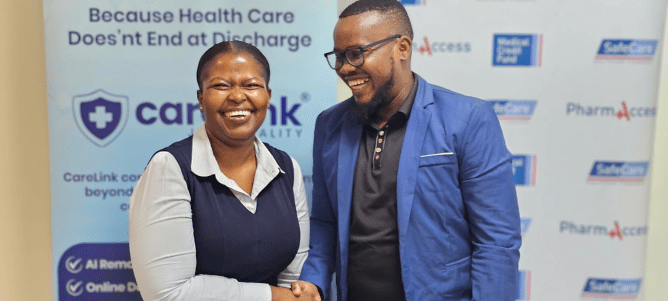
Ibrahim, you continued into Phase Two with our co-founder Rod as your mentor - what's a piece of his advice that's stuck with you?
"One of the most impactful lessons Rod shared with me was not to treat plans as urgent tasks, but instead to document them clearly and strategically. He introduced me to the concept of having our vision written down on a single page through our OPSP - a One Page Strategic Plan, which every founder builds with Rod early on. This completely changed the way I approach running a business. Today, each department within CareLink operates with defined KPIs and milestones, allowing us to track progress more effectively and stay aligned with our long-term vision."
In our last blog update, you were building the CareLink app for patients and doctors. What's changed since then?
"After months of challenges, learning, and continuous improvement to ensure the product truly fits our healthcare environment, CareLink has now entered the testing phase with selected users. Earlier this month, we successfully conducted a User Acceptance Test with healthcare providers, who responded positively and expressed enthusiasm about using the platform.
Our next steps include training healthcare providers within participating facilities, followed by onboarding patients who'll use the CareLink mobile app. We're then preparing for full deployment across two pilot hospitals in Zanzibar - Afya Plus Hospital and Global Hospital - supported by partners including PharmAccess Foundation and the Ministry of Health Zanzibar's NCD Unit."
Tracking 'lives changed' is key to our programme - what's that looking like for CareLink so far?
"CareLink is targeting over 1,000 non-communicable disease patients a month across our partner hospitals. Through CareLink, they'll be able to maintain continuity of care and stay connected with their trusted doctors beyond hospital visits. Through our connected initiative, REIZA*, we've also funded surgery for two patients, and we're looking forward to helping many more as CareLink becomes fully operational."
REIZA is CareLink's giving-back arm, funding life-saving surgeries for families in poverty.
Sahera, founder of Worldwide SHEroes (Australia)
Worldwide SHEroes is a global mentoring programme connecting women from marginalised communities with accomplished female mentors around the world, helping them build confidence, leadership skills, and new opportunities to step into leadership.
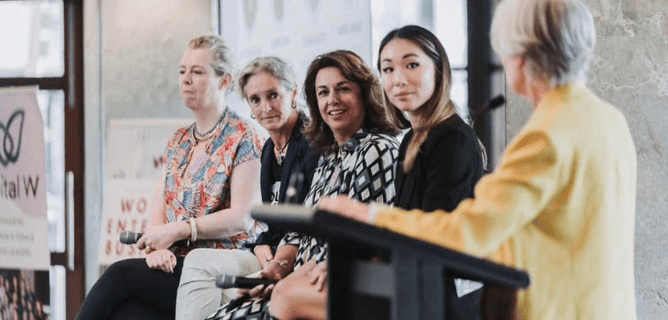
Sahera, you've been wokring with Senga, your Phase Two mentor for many months now. What's something she's said or shown you that's reshaped how you run Worldwide SHEroes?
"Senga has been a wonderful support in sharing her business journey, pitfalls, challenges, and successes. One piece of advice I've particularly valued is understanding where to focus my energy and time - and being deeply intentional about it. As a result, I've outsourced my marketing and social media strategy, along with the digitisation of my online platform, so I can focus on the areas where I create the greatest value and impact. My CEO mantra now is: 'Who can do this better, faster, and more efficiently?'"
You were focused on getting the right roles in place when we last spoke. What's the next cab off the rank?
"The BIG thing on my list is launching the SHE Rise Leadership Pathway - a newly designed programme that combines personal development, professional development and hands-on mentoring practice. It trains participants to become mentors for the women from underserved and under-represented communities - building social impact directly into their leadership journey.
I'm currently exploring partnerships with membership organisations, foundations, and mid-sized businesses who want to build leadership capability within their own teams, while also contributing to that bigger goal of empowering women globally. This is the target market for the programme"
Give us a sense of the impact so far - how many women has Worldwide SHEroes reached?
"To date, we've supported close to 300 women across 35 countries and 12 industry sectors, and we've expanded our mentoring delivery into four languages - English, French, Spanish and Portuguese. We've also engaged Western Sydney University as a research partner, with a master's student analysing three years of our programme data. The findings have just been finalised, and we'll be hosting a launch event to share the results."
Irene, founder of MAMLO Foods (Kenya)
MAMLO Foods runs a network of solar-powered micro-factories that enable women farmers in Kenya to process peanuts into high-value products like peanut butter - boosting incomes and building community-owned agribusinesses that tackle poverty and gender inequity.
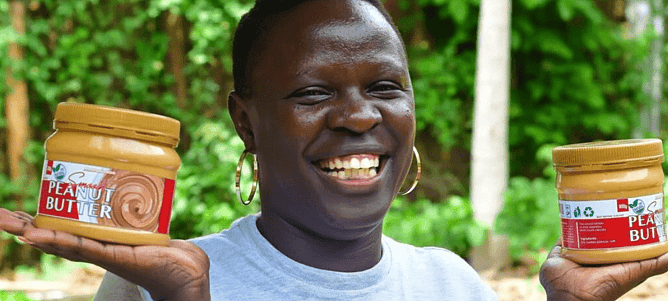
Irene, you've been paired with Earl for Phase Two of your mentoring with us - what's a piece of his advice that's changed how you lead MAMLO?
"One of the most valuable lessons Earl has shared is that my role as a founder must evolve as the business grows. He often reminds me that I don't need to be involved in every operational detail - instead, my job is to build and empower a team that can execute while I focus on strategy, partnerships, and growth. That mindset shift has helped me become more intentional about delegation and leadership."
In our previous blog update, you were building MAMLO's financial blueprint. Where's the business at now?
"Since the last newsletter, our focus has largely been on turning plans into action through market expansion and strengthening our business systems. One milestone I'm particularly proud of is growing the number of outlets stocking MAMLO peanut butter - from fewer than 50 to more than 200 across Kenya, significantly increasing access to our products. Alongside this growth, we've strengthened our financial planning, operational processes, and investor readiness. The next big milestone is expanding our production capacity so we can supply even more outlets - 700-plus by the end of the year - while creating greater opportunities for the women smallholder farmers at the heart of our work."
And the big one - how many lives has MAMLO touched so far, and who are they?
"To date, MAMLO Foods has reached more than 5,200 people directly and indirectly. These include women smallholder peanut farmers, farmer aggregators, local retailers, women and youth engaged in the value chain, and consumers who now have access to nutritious, locally produced peanut butter. At its core, our work is about ensuring that the value created from Africa's crops stays within the communities that grow them."
Onwards...
Three entrepreneurs, three very different businesses, all moving from plans on paper to real change on the ground: Healthcare reaching further, women stepping into leadership across the globe, peanut butter - yes, really - changing the economics of rural Kenyan farming communities.
We'll catch up with Ibrahim, Sahera and Irene again as they wrap up their year with us. Until then, here's to their hard work, their mentors’ steady support, and everything they’ve achieved to date.